|
1
|
- As told by Greg Thompson
gregt@alum.mit.edu
- One of a number of “MazeWars” game authors
|
|
2
|
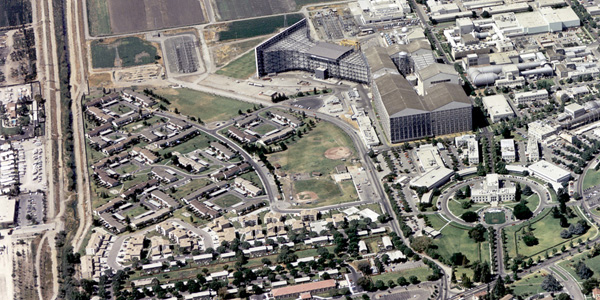
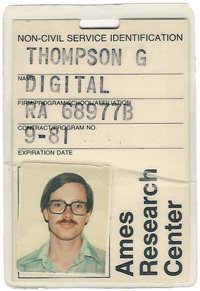
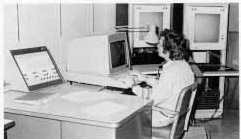
- At NASA/Ames Research Center Computation Division Moffett Field
California sponsored by Jim Hart
|
|
3
|
- Steve Colley & Howard Palmer
- Greg Thompson
- Homestead High School ’73
John McCollum, electronics teacher
- Steve Jobs ’72 and Steve Wozniak ’68 came
from the same lab, founding Apple in 1976
- For school credit, later via PMI»Informatics, Digital
- plus Jim Clark and others
- For example: Jim was a
post-graduate at the time
- Went on to co-found SGI in 1981 and Netscape in 1994
- SGI built the building the Computer History Museum is now in
- SGI used in 1st cable VOD trial 1994 in Orlando by Time
Warner
- SGI now the major Super Computer supplier to NASA/Ames
|
|
4
|
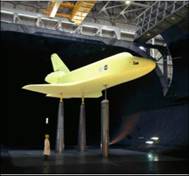
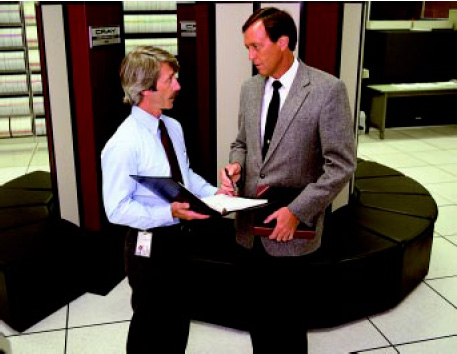
- Charter of Jim Hart’s group was to provide support to the aerodynamics
research at NASA/Ames including:
- Wind Tunnel Data Acquisition and Analysis
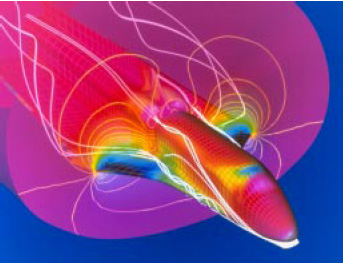
- Computational Fluid Dynamics (CFD) research
- Our focus was in graphics-based visualization of results
|
|
5
|
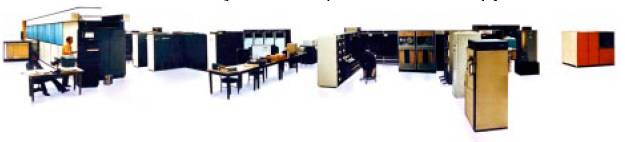
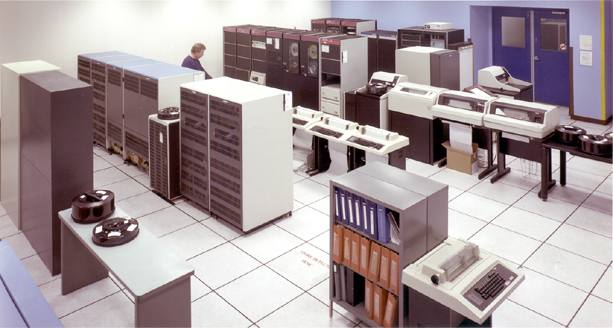
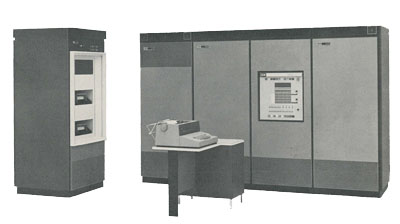
- IBM 1800 & duplex IBM 360/67 under TSS in 1969
- Illiac IV in 1972 (not reliable/operational until Nov 1975)
- CDC 6600, then a CDC 7600 in 1975, Cray 1S in 1981
- Digital Equipment Corp PDP-11s and VAX/VMS systems
|
|
6
|
- IBM 2250 attached to an IBM 1800
- Dicomed D47 Color Film Recorder
- Evans and Sutherland LDS-2
- Tektronix 4010/4014 terminals
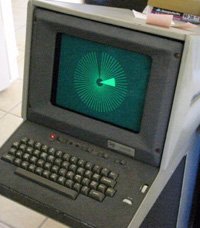
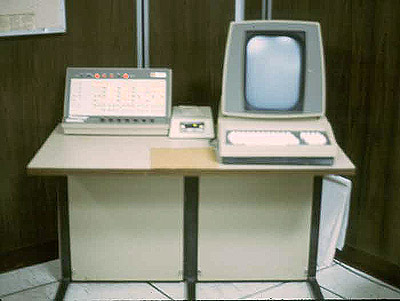
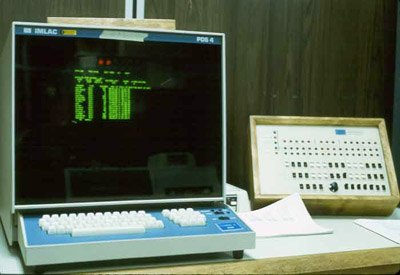
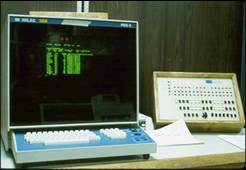
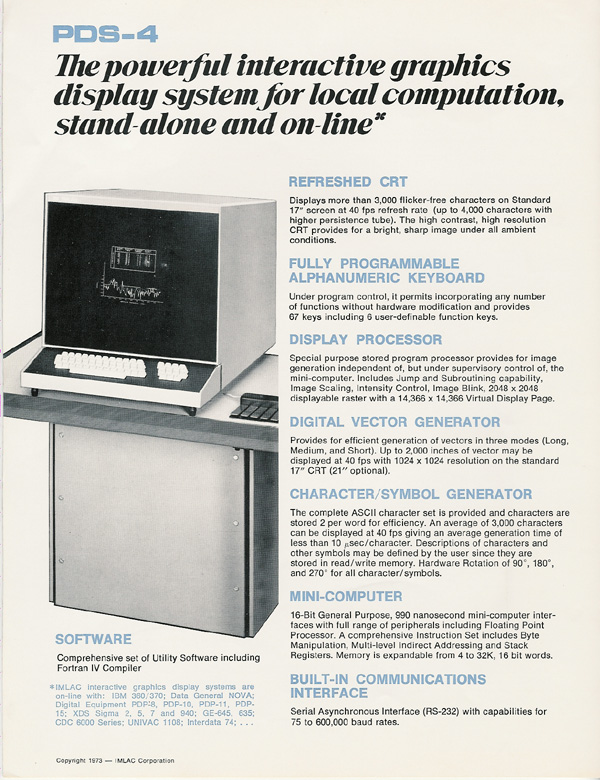
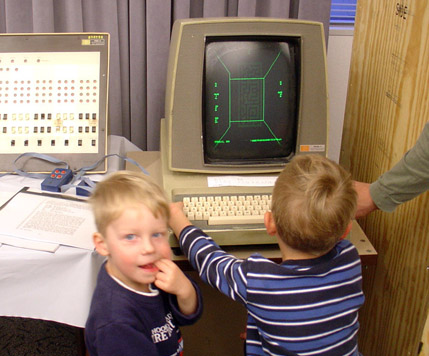
- Imlac PDS-1, PDS-1D, PDS-4s
|
|
7
|
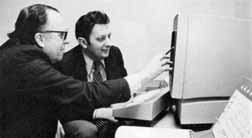
- 16-bit PDP-8 like minicomputer plus a fully programmable vector-based
display processor
- Developed infrastructure, WYSIWYG text editing,
software emulating other terminals (IBM 2250, Tek)
plus games while researching the platform’s capabilities
|
|
8
|
- Imlac Corp founded 1968
- Four models released:
- PDS-1 in 1970
- $8,300 + options, 4K words
- 2us cycle time, 15” screen
- PDS-1D in 1972
- $9,970, 10% faster (1.8us)
- 8K words, better interrupts
- PDS-1G in 1973
- $8,500, re-designed PDS-1D
- PDS-4 in 1974
- $17,300, 1us cycle time
- 17” screen, 16 inten, 4 pgs
- 600 PDS sold by 1977
|
|
9
|
|
|
10
|
- Started with Steve Colley experimenting
with display of 3D images on the Imlac
- Rotating wire-frame hidden-line-removed 3D cube
- I worked on an interactive Imlac debugger/interpreter
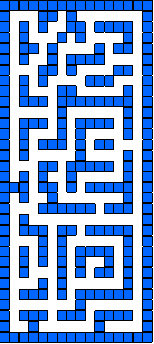
- Then idea of a 16x16 array of bits defining a maze
- Absence of bits defines corridors
- Steve worked out how to display perspective view
- Howard Palmer and Steve developed single player Maze
- Adding ability to move through the maze
- Simple game: Try to find exit out of the Maze
- Howard and Greg developed initial multi-player version
- Two Imlacs connected with serial links
- Soon the idea of shooting each other was added
|
|
11
|
- We headed off to college
- Steve went to Cal Tech
- Howard went to Stanford
- Greg went to MIT in Fall 1973
- I soon got involved at MIT Project MAC
- Dynamic Modeling System (MIT-DMS)
- 4th floor 545 Technology Square
- Server: a PDP-10 (DEC-1040-KA) running ITS
- With lots of Imlac PDS-1s as terminals at 50Kbps
- Spring Semester (Feb 1974) I brought to MIT-DMS:
- Imlac programs from NASA/Ames including Maze
- NASA/Ames DEBUG program became GRADE at MIT
- Dave Lebling and I decided to bring up Maze as well
|
|
12
|
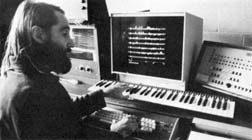
- I significantly enhanced the Imlac Maze code
- Adding full multi-player, local top-down view, cheats
- Dave Lebling wrote the PDP-10/ITS Maze Server which:
- Downloads Maze game and
optional personalized Maze
- Links up to 8 players or
generated robots in a game
- Included text messaging and
top-down game view on E&S
- Players drawn using ITS userid:
|
|
13
|
- Function keyboard keys were:
- UP ARROW - Move forward 1 square
- DOWN ARROW - Back up one square
- LEFT ARROW - Turn 90 degrees left
- RIGHT ARROW - Turn 90 degrees right
- FUNCTION 4 - Turn 180 degrees around
- PAGE XMIT - Peek around corner to the left
- XMIT - Peek around the corner to the right
- ESC - Fire in direction of view
- CTRL-Z - Exit Maze game
- FORM - Erase message text display buffer
- TAB - Look at maze from top
- All other keys - sent to other players as text
- Mice buttons and Keyset keys can also be used
- Cheats to display other player’s perspective
and to change local definition of maze
|
|
14
|
- 0018 – Player leaves game
- 0028 – Player moved
- <ID of player>
- <New direction | 100>
- <New X location | 100>
- <New Y location | 100>
- 0038 – Player died
- <ID of shooter>
- <ID declared dead>
- 0048 – Announce new player
- <ID of new player 1 to 8>
- <6 chars of ID name>
- <2 chars number of hits 2x6 bits>
- <2 chars # of deaths 2x6 bits>
- 0148 – Clear text display buffer
- other – Text to display
|
|
15
|
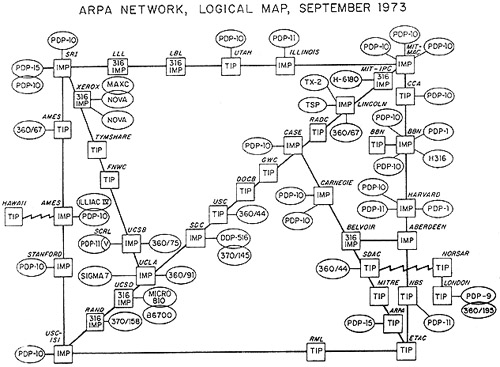
- Imlacs were mentioned in many early RFCs (1971 to 1984):
- 86, 101, 126, 164,
174, 177, 190, 191,
249, 282, 314, 321,
372, 373, 398, 472,
549, 553, 559, 900
- In use at:
- BBN, Case,
MIT, Mitre,
NASA/Ames,
SRI-ARC/NIC,
Stanford AI,
UCLA, UCSB,
Univ. of Illinois,
and elsewhere
|
|
16
|
- Before long Maze games spanned across the Arpanet
with players at USC and Stanford who also had Imlacs
- “Legend has it that at one point during that period,
MazeWar was banned by DARPA from the Arpanet
because half of all the packets in a given month were
MazeWar packets flying between Stanford and MIT.”
- One problem was original Maze protocol didn’t take into account high
latency and overhead over the Arpanet
- Shooting Imlac decided when target player was dead
- Ken Harrenstien and Charles Frankston fixed the problem
using new one byte messages for indicating relative motion
- Lower 3 bits of char is ID of originator, upper 4 bits is action:
- 02x – ID turned right 15x – ID moved forward 1 step
- 03x – ID turned left 16x – ID moved backward 1 step
- 14x – ID turned around 17x – (reserved)
|
|
17
|
- Fall 1977, three of us from our dorm took
EE digital design labs
- Course 6.111 or 6.112 (advanced)
- We jointly proposed
a hardware version of Maze complete with
- Multiple robots
- 3D using 4 floors
- We were told it was too ambitious
- But we didn’t let
that stop us
|
|
18
|
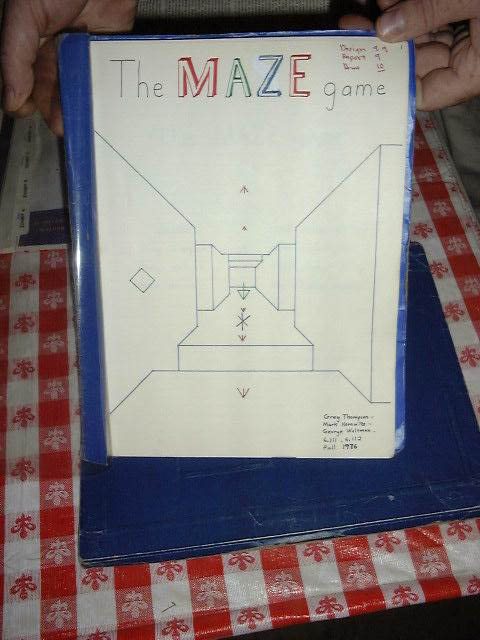
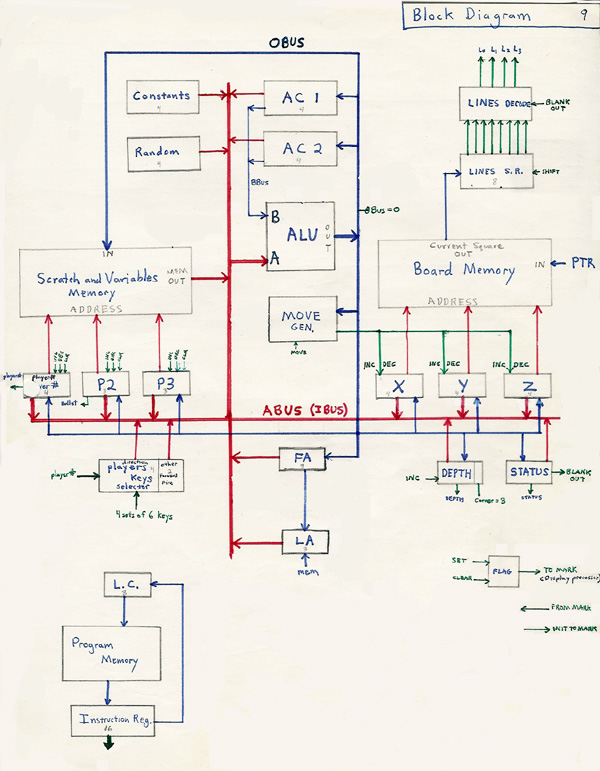
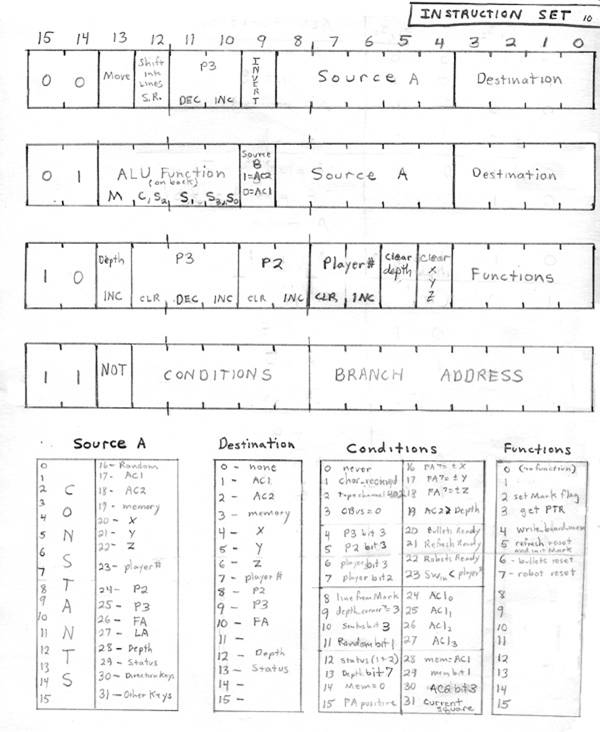
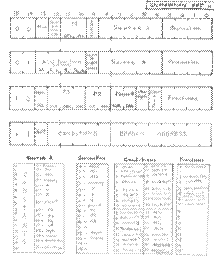
- I designed a custom Maze
processor for the game
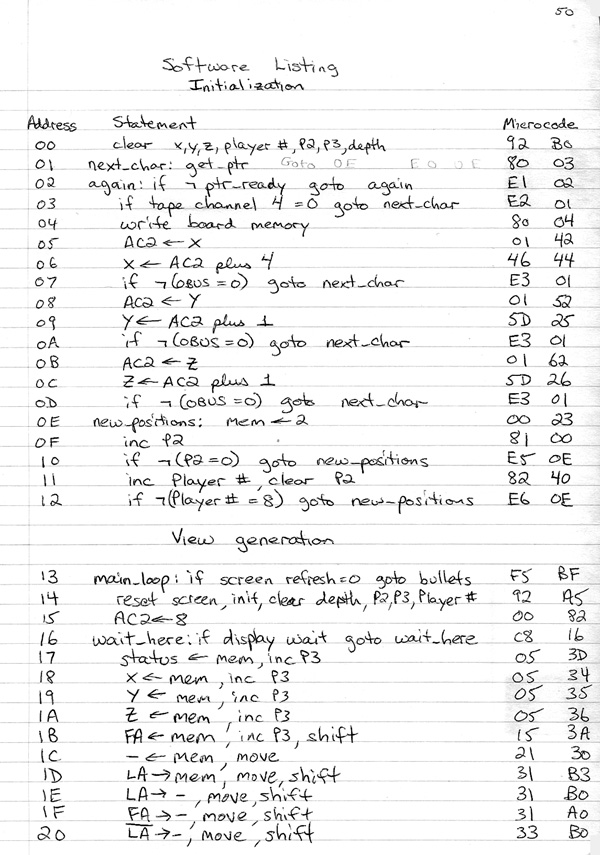
- George Woltman wrote
the software for it
- In 256 16-bit words
using 1702 PROMs
- 128 bytes RAM to store
a 16 x 16 x 4 Maze
- 128 bytes RAM for state
- Mark Horowitz designed
the display processor
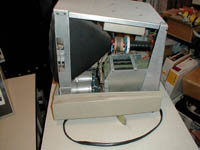
- Human displays used 4
Tektronix Oscilloscopes
|
|
19
|
|
|
20
|
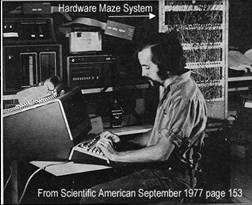
- Project completed weeks early
- Programmer’s panel with
- Address stop, Lights, &
Single Step for debugging
- Project required:
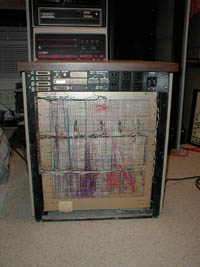
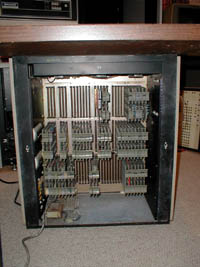
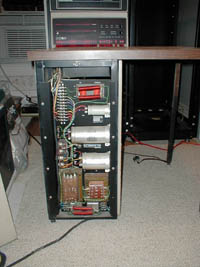
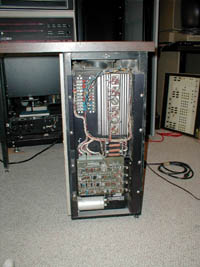
- 4 rails (83 cards)
for main processor
- 2 rails (45 cards)
for display processor
- Maze loaded from
paper tape reader
- Clock rate controlled
how tough robots were
|
|
21
|
- Developed by Jim Guyton
- Based on MIT Imlac version
- Re-written to
support the
raster-based
displays
- Ran over the
3 Mbps Ethernet
|
|
22
|
- Developed by Drew Major
and Kyle Powell in Provo Utah
- Created to test the new
IBM PC and LAN networking and as a demo for SuperSet Software
that led to Novell
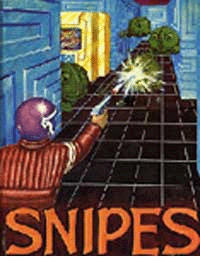
- Snipes game bundled with
Novell Network as NLSNIPES
starting in 1990
- Text-based but widely
distributed and played
|
|
23
|
|
|
24
|
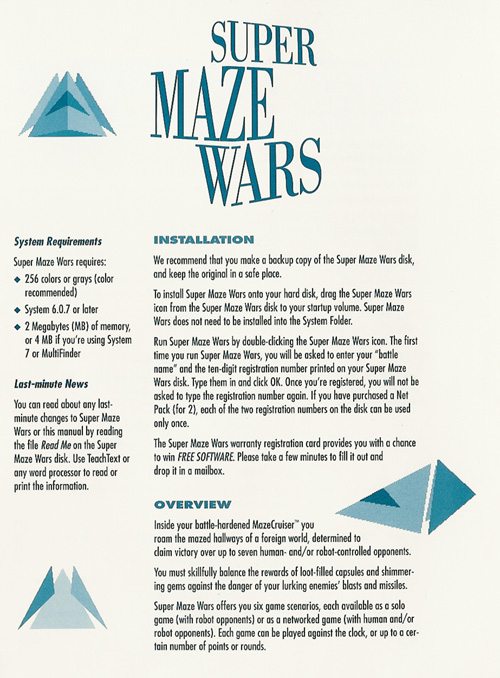
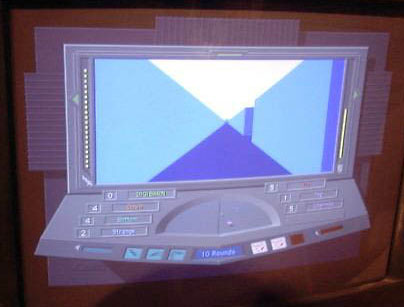
- by Callisto out of
Natick Massachusetts
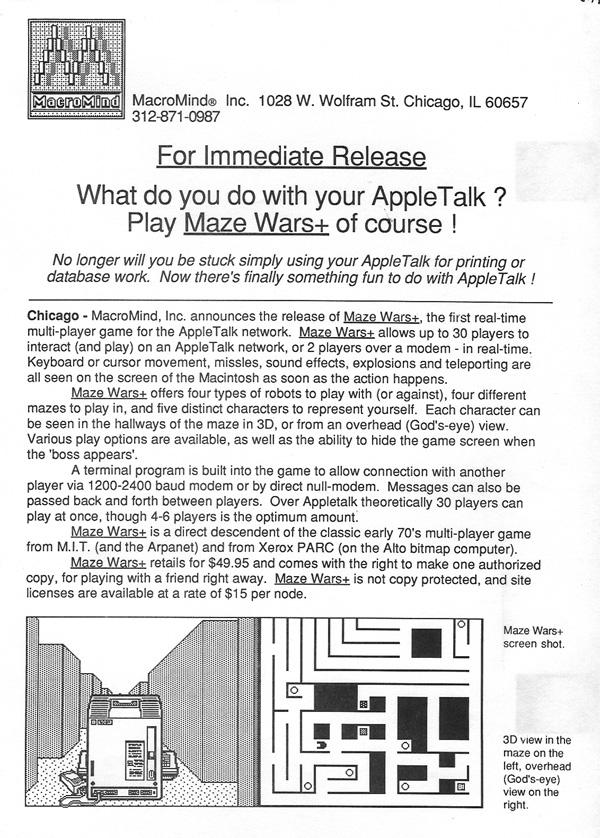
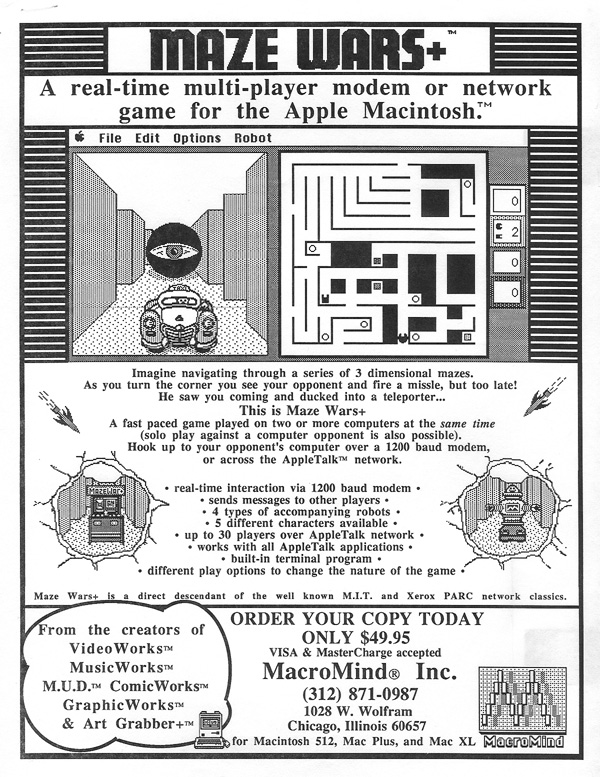
- Bundled in with Macintoshes
from Apple for a time
|
|
25
|
- X MazeWars by Christopher Kent of DEC in 1986
- MIDIMaze for Atari ST by Hybrid Arts in 1987
- Faceball 2000 for the Game Boy
by Bullet-Proof Software in 1990
- MazeWars for NeXTSTEP by
Mike Kienenberger & others 1994
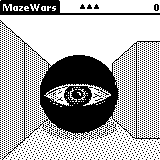
- MazeWars for PalmOS v2.0
by IndiVideo in 1998
|
|
26
|
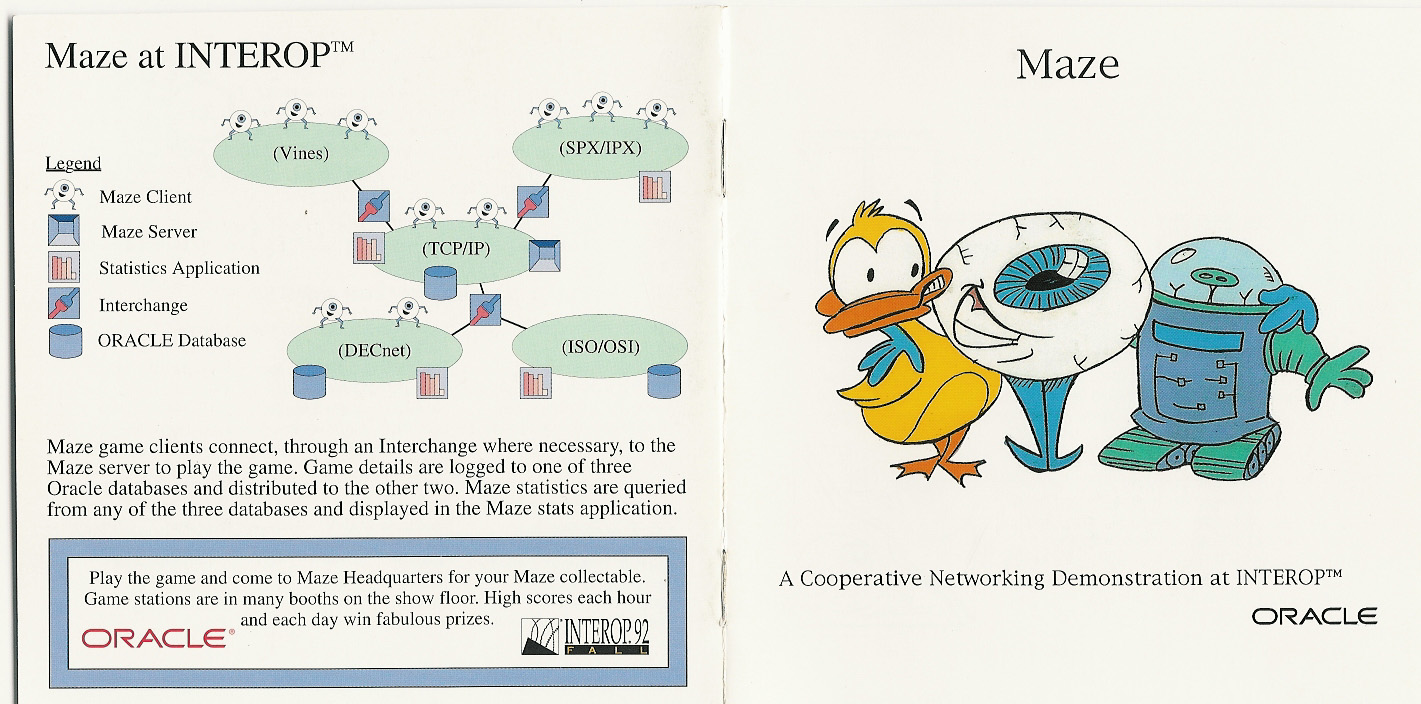
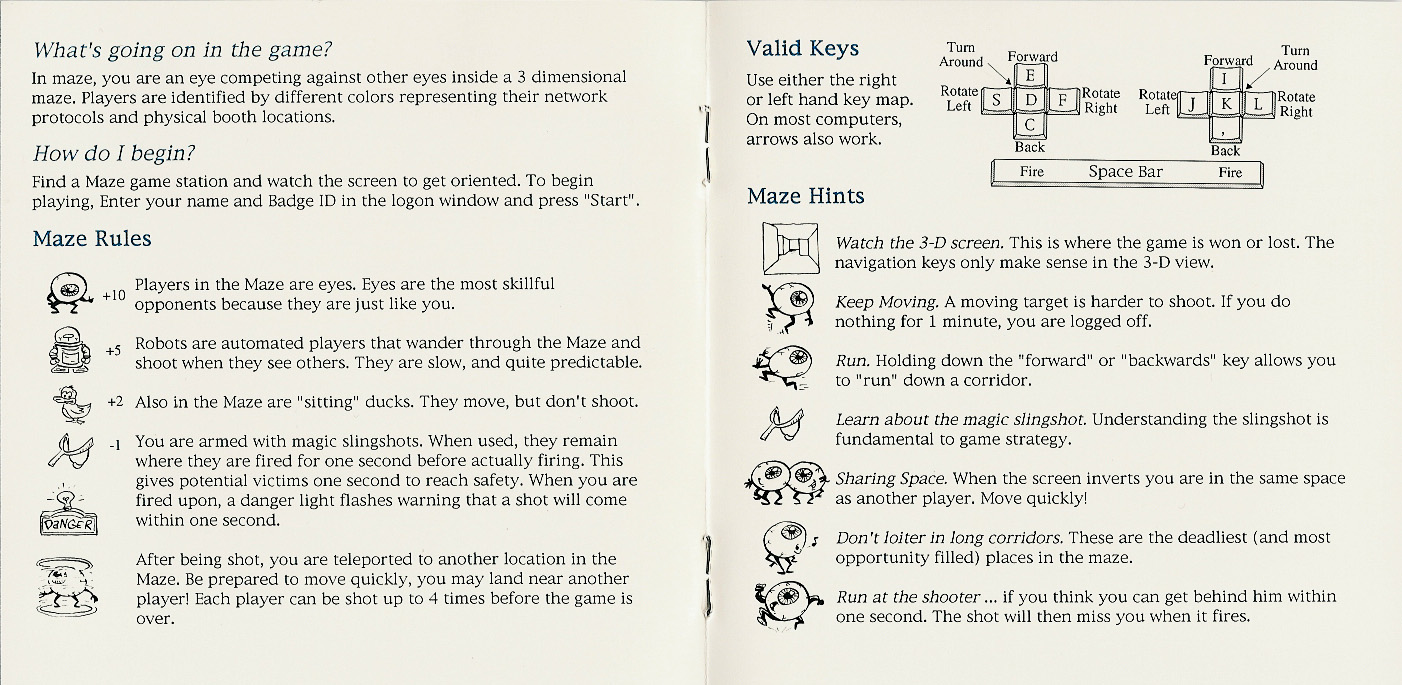
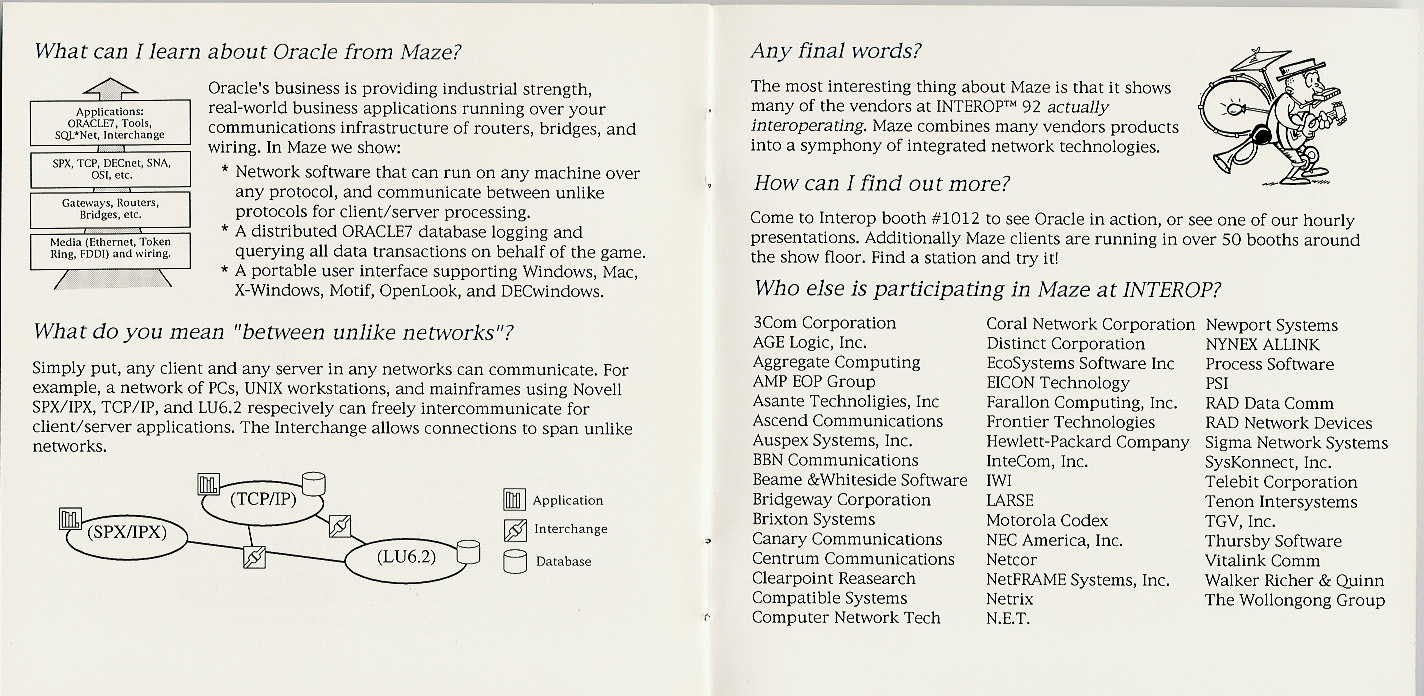
- For Interop 92 Jack Haverty and others at Oracle developed a
multi-platform Maze game to demo SQL*Net
|
|
27
|
- Jack Haverty worked at MIT-DMS while I was there
|
|
28
|
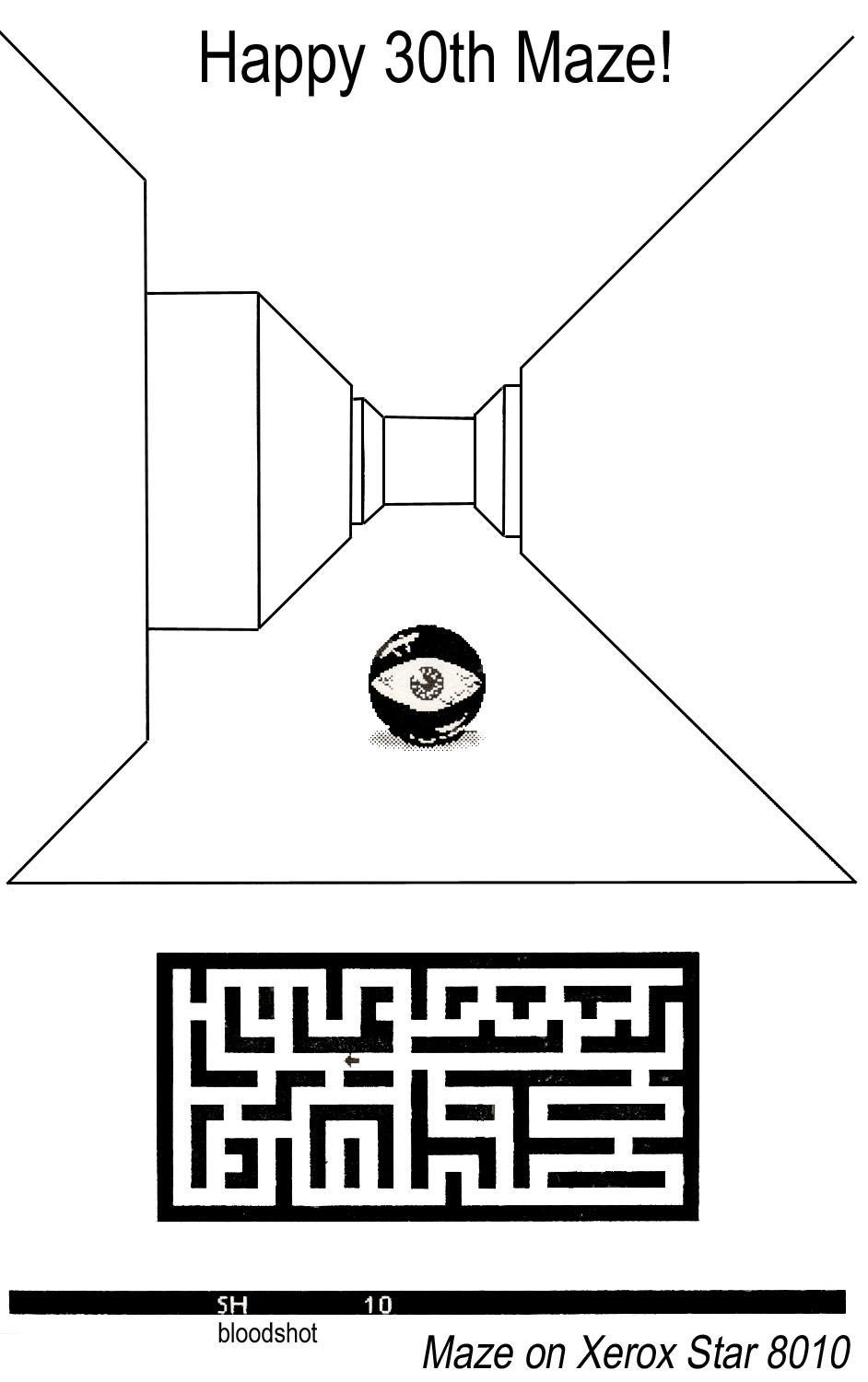
- Same rules but better graphics
|
|
29
|
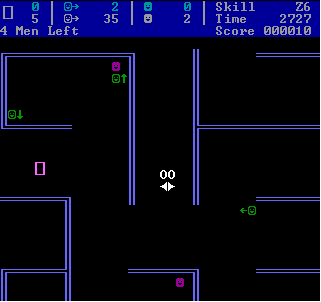
- Almost over all Networks and Platforms
|
|
30
|
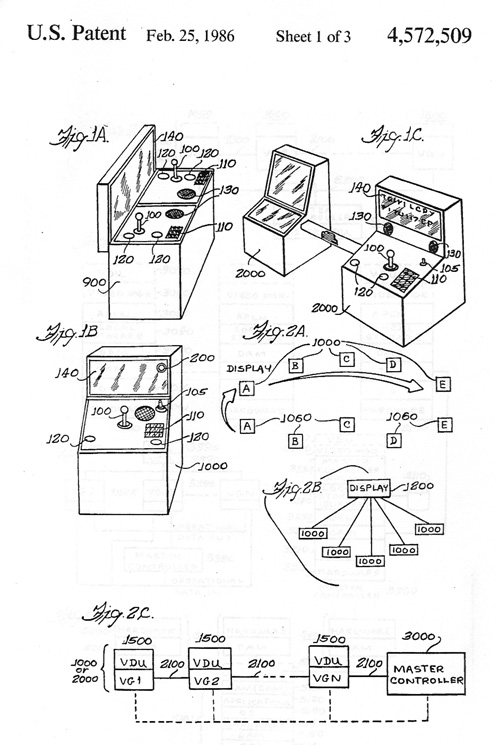
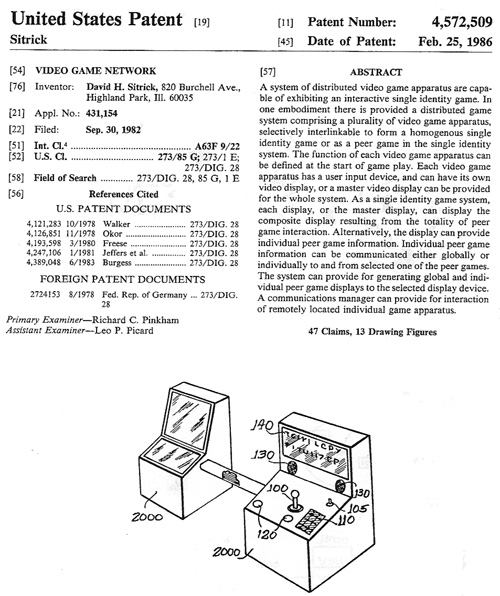
- Initiated the un-earthing of Maze history
- Received an e-mail in March 2000
from Charles Frankston at Microsoft
- Attorneys
looking to
identify
networked
multi-player
games
prior-art
< 1982
- Case was
settled out
of court
|
|
31
|
- For example: Stanford University
Computer Science 244b: Spring 2004
- Assignment 1 - Mazewar: A Multiplayer Computer Game
- See https://www.stanford.edu/class/cs244b/mazewar_desc.html
- and https://www.stanford.edu/~priyank9/projects/mazewar.pdf
- or University of Pennsylvania class CSE480
- A hardware MazeWars game can now probably
be implemented in a single FPGA chip
- A pet-project of mine I haven’t yet got to
- Just too busy with Video-on-Demand (VOD)
- Previously as CTO at nCUBE
- Now as Chief Video Architect at Cisco Systems BEMRBU
|
|
32
|
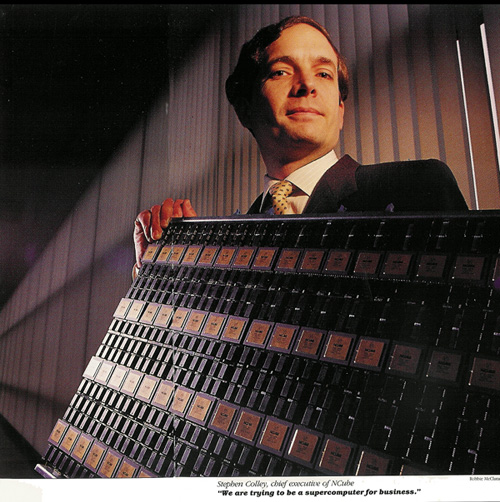
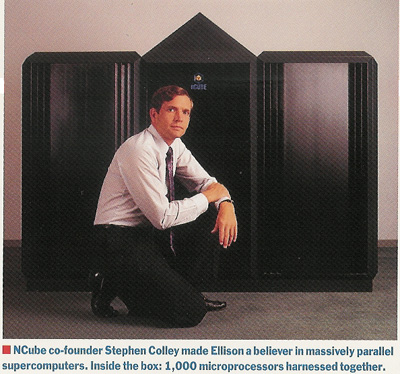
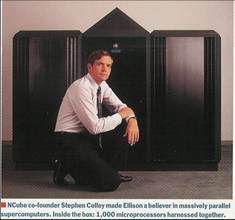
- Steve Colley went on to found nCUBE in 1983
- Purchased by Larry Ellison late 1980s
- Howard and I joined nCUBE in early 1990s
- nCUBE became a leader in Video-On-Demand
|
|
33
|
- Dave Lebling went on to form Infocom in 1979 creating
Interactive Fiction games like Zork, Enchanter, Suspect,
Starcross, Shogun, Spellbreaker Deadline, and others
- Mark Horowitz became Yahoo Founder’s Professor and
Director of the Computer Systems Lab at Stanford, as
well as a co-founder of Rambus Inc. in 1990
|
|
34
|
- George Woltman became the author of the
Great Internet Mersenne Prime Search
(GIMPS) searching for Mersenne Primes (2n-1)
|
|
35
|
|

 Notes
Notes